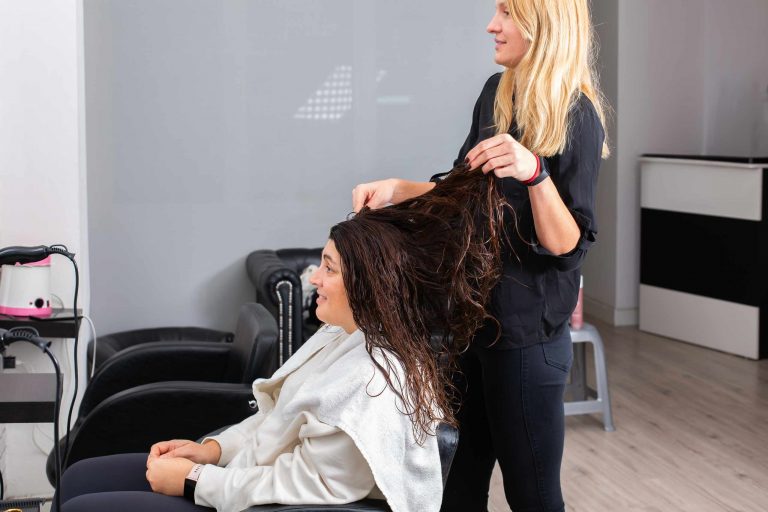

Feedback often feels personal in the initial stages because the final result on the mannequin simply doesn’t align with the mental image you’re working with. Every completed cut and style displays the cumulative effects of your choices, which means a single critique can feel disproportionately weighty. The secret is to view feedback as a reflection of the work, rather than a judgement of your abilities. In the hair arts, constructive feedback is rarely general. It’s specific: the part was too wide, the tension shifted in the middle, the blow-dry drifted as it reached the crown, or the fringe was heavier on the left than the right. When feedback refers to a visible movement, you can test and try it rather than simply taking it in.
The easiest place to start with feedback is self feedback prior to requesting others. After a short session, put the comb down and look quietly at the shape from all sides without searching for “perfect,” looking instead for “patterns.” Maybe the line gets thicker toward the sides every single time, or the round brush creates a smoother finish on one side. Perhaps the blending at the back works well, but there is no connection around the face. These are things that repeat themselves far more than single “imperfections” and point to where your technique is inconsistent. If you can explain what’s happening in non-judgmental terms, you’re halfway there toward improving it. “The shape seems to be very heavy at the bottom” will yield more benefit in the next lesson than “it looks bad,” as you have a clear target for what you want to accomplish next time.
A frequent error that is made is the request for broad feedback. If the question is, “What do you think of this work?” the answer is often returned too broadly to be helpful. This is why it’s frustrating to receive feedback: it is often true, but it is also impossible to know what to do with the feedback. The better way is to ask for one specific observation related to one specific aspect. For instance, ask if the weight line seems balanced, if the parting was crisp to the crown, or if the finish held up when brushed out. Specific questions usually result in specific responses. They also support your confidence, as it allows you to focus on one specific element of your work rather than making your entire lesson seem like a “do or die” exam.
Feedback becomes easier to work with if you set aside a fifteen-minute period. Take the first five to try one tiny bit of technique, such as building a clean, solid perimeter or smoothing out a curve with a round brush and dryer. Spend the next five minutes examining the piece and identifying both one “pro” and “con” and writing it out; use specific words. Then, dedicate the final five minutes to attempting that same bit of technique while keeping one change in mind. Taking that quick step is crucial because feedback is much more useful when you are able to jump into the next try right away; your body is comparing the first attempt and the second as the memory is still hot. Self reflection sharpens the eye but self reflection with re-trial begins to change the hands.
It is also vital to be aware when feedback is being processed negatively. If you get one piece that isn’t even, and you want to abandon the whole cut, stop and lower the stakes. You can still cut a piece if the fringe is too heavy. You can still have a sense of balance if the root is not blown out. You probably just need to slow down on that particular part. Go back to the time at which the piece lost its shape. Perhaps you were a bit loose when picking your parting, perhaps you loosened your tension on the brush just a little bit above your forehead, or perhaps the weight of the guide was lost because it was too heavy. Once feedback has been traced to the action, your confidence is less likely to waver since the cause isn’t so unknowable.
You want feedback that makes your eye sharper but your willingness to try longer. In the long run, you want to be the person who can notice more, adjust with composure, and repeat your techniques with higher purpose. That improvement isn’t just a product of praise or a product of scolding. It comes when the work is seen, honestly labelled, and then attempted once again with one slight change. In the hair world, that cycle fosters confidence in a very tangible manner. Once it stops being a matter of luck or circumstance for you, you start seeing exactly how improvements are actually formed in the palm of your hand.